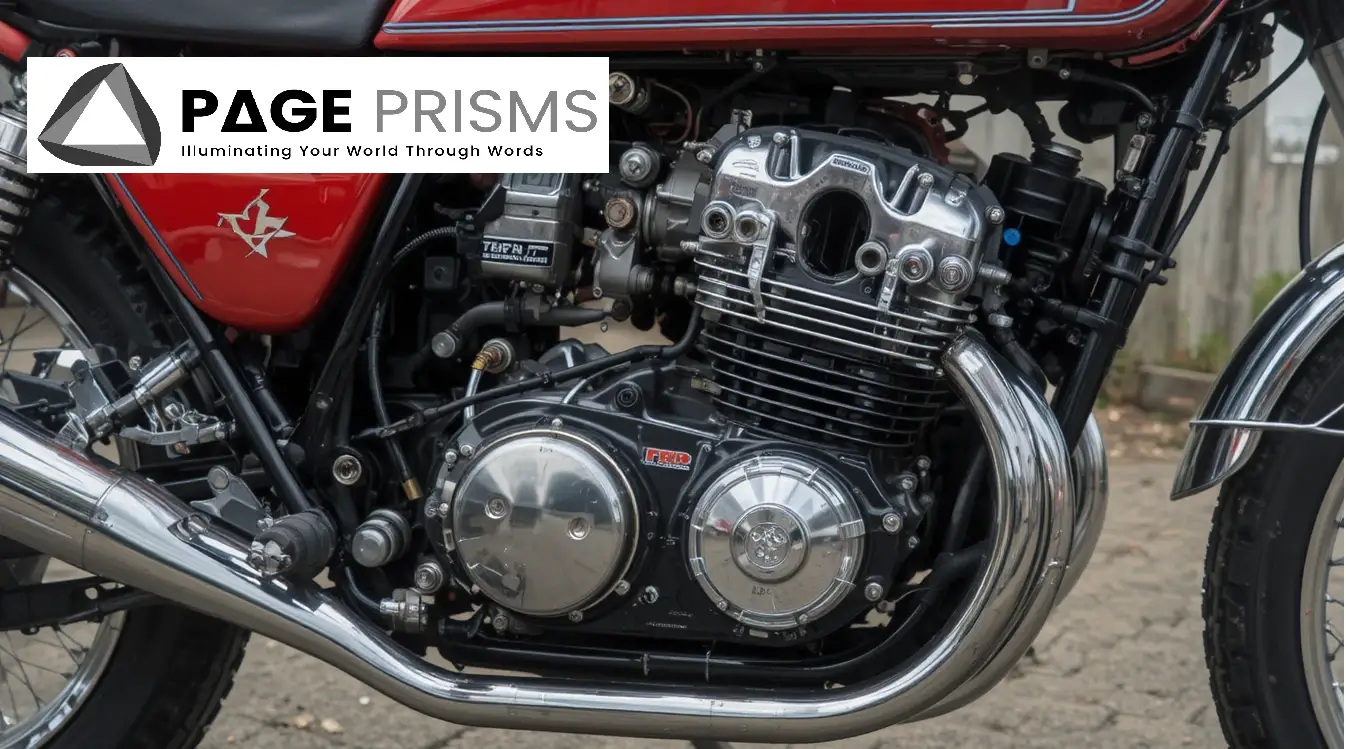
For decades, the Yamaha RD series—especially the RD 125, RD 135, and RD 350—has held incredible status among two-stroke devotees. Their crude control conveyance, unmistakable ring-ding sound, and lightweight feel make them religion classics over Brazil, India, and other locales. At the heart of their performance lies one component that riders obsess over more than any other: o escapamento. And within that passion comes the fascination surrounding “Escapamento RD Secrets”—the insider knowledge that separates an average RD from a masterfully tuned monster.
Why the Exhaust Matters So Much on the RD
Two-stroke engines rely heavily on exhaust design, far more than typical four-stroke motorcycles. The exhaust is not merely a pipe—it controls scavenging, compression waves, temperature, and ultimately, the engine’s powerband. On an RD, a well-designed exhaust can dramatically improve:
- Acceleration
- Top speed
- Torque delivery
- Fuel efficiency
- Engine lifespan
That’s why experienced RD builders treat the escapamento as the soul of the bike’s performance.
The Secret Behind the Expansion Chamber
At the core of RD exhaust tuning is the expansion chamber, a uniquely shaped design that builds the two-stroke’s famous power surge. The “secret” lies in how each section—header, diffuser, belly, baffle cone, and stinger—interacts with pressure waves inside the pipe.
Here are the fundamental performance secrets admired by expert tuners:
1. The Length of the Chamber Determines the Powerband
A shorter chamber shortens exhaust resonance, creating strong top-end power, ideal for high-RPM riding.
A longer chamber increases torque, giving the RD more low-end pull for city riding.
2. Diffuser Angle Controls Engine Breathing
A steep diffuser angle improves scavenging efficiency but can cause instability if overdone.
A more conservative approach produces smoother, more predictable power.
3. The Belly Diameter Dictates Sound and Power
A wider belly enhances the classic RD sound—deep, metallic, and aggressive—while simultaneously increasing high-RPM horsepower.
4. The Stinger Regulates Heat
One of the most critical yet misunderstood secrets:
A stinger that’s too small overheats the engine, while one that’s too large reduces power.
Finding the balance is the hallmark of an excellent RD exhaust builder.
Handmade vs. Factory vs. Custom Tuning
In the RD community, handmade exhausts—often crafted by small workshops or individual artisans—are prized for their precision and character. Unlike mass-produced pipes, handmade chambers are:
- Tuned to specific riding styles
- Bent and welded for optimal pressure flow
- Often lighter and better welded
Many tuners keep their exact mathematical formulas secret, which is where the idea of “Escapamento RD Secrets” truly comes from—decades of trial, error, and refinement.
Sound: The Signature of the RD
Beyond performance, an RD exhaust is famous for its musical note. A properly tuned chamber produces:
- Crisp throttle response
- Clean, rhythmic idling
- A screaming high-RPM note
Enthusiasts can often identify a builder simply by hearing their exhaust.
Why These Secrets Matter Today
Indeed, as present-day bicycles move toward emissions-controlled four-strokes, the RD community remains lively and enthusiastic. Restorers, collectors, and day-to-day riders continue to seek the best deteriorated setups to preserve the distinctive character of these two-stroke machines.
Understanding the insider facts of escapement not only improves execution but also keeps the RD’s legacy alive in modern eras.